
PlayStation ends disc production in 2028: the end of an era?
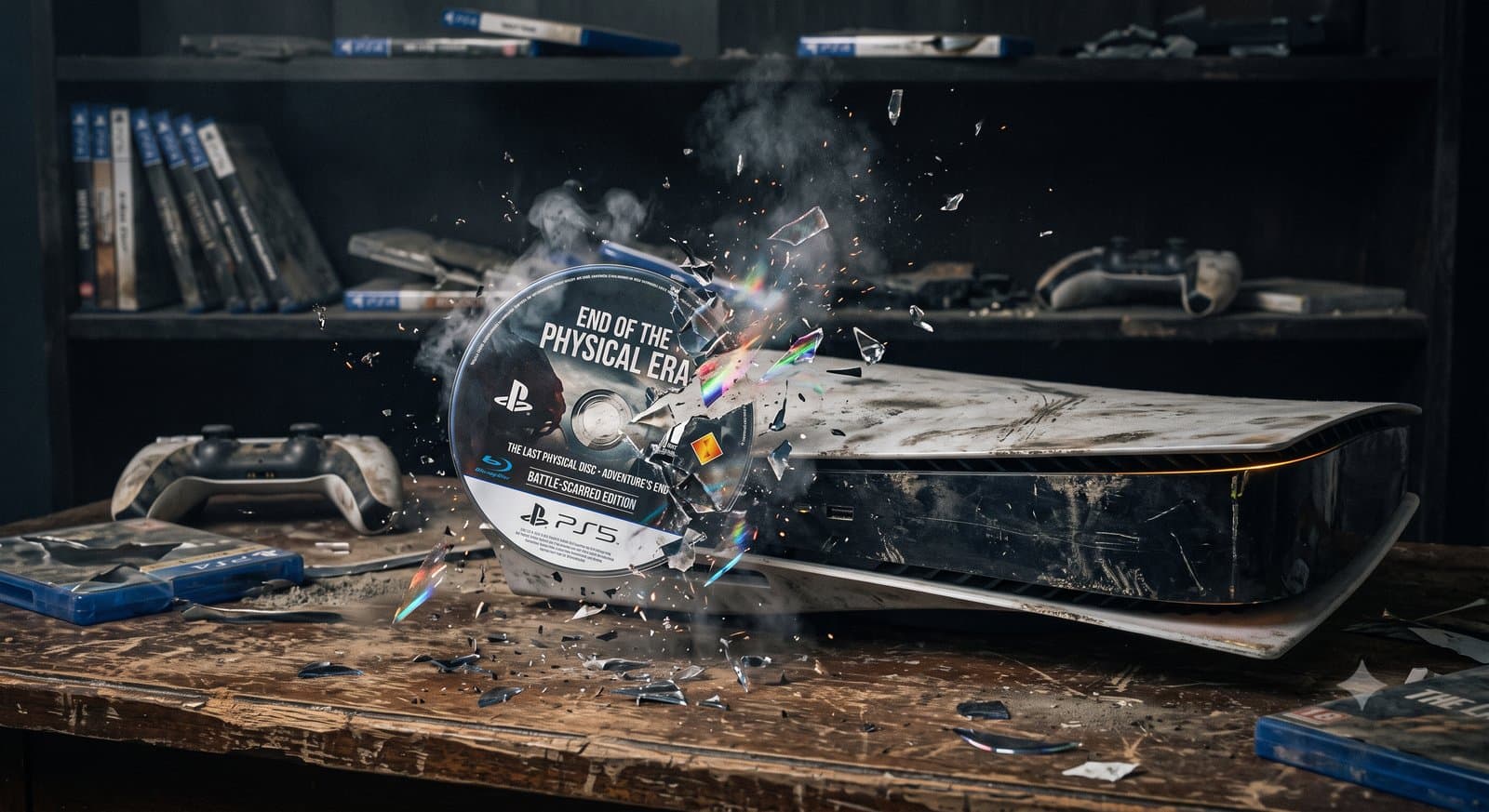
On 1 July 2026, PlayStation announced the end of disc production for its new games starting in January 2028. What it changes, what it does not, and why the real issue is not the disc, but your rights.

What is an EULA? The contract you sign without ever reading it
A video game is not an object you own: it is a contract you accept. The EULA (End User License Agreement) is the same for every game from a publisher, it can change after your "signature", and almost no one reads it. Here is how it works.
Stop Destroying Videogames: the European Commission's response, and why the fight continues
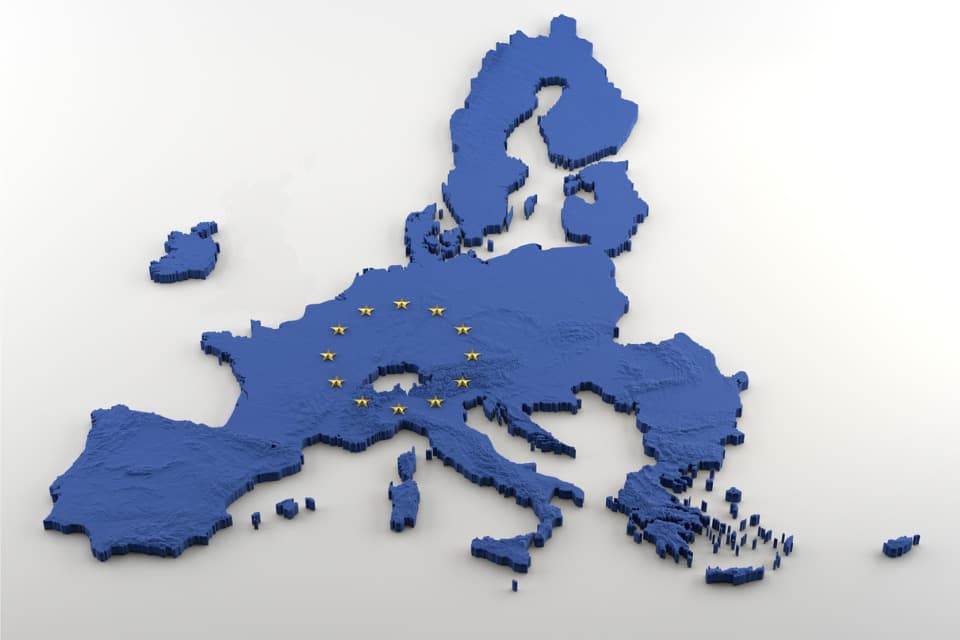
On 16 June 2026, the European Commission responded to the citizens' initiative "Stop Destroying Videogames" and its 1.29 million signatures: no new law for now. An analysis of this decision and the levers that remain.





Recent articles
All articlesPlayStation ends disc production in 2028: the end of an era?
On 1 July 2026, PlayStation announced the end of disc production for its new games starting in January 2028. What it changes, what it does not, and why the real issue is not the disc, but your rights.
"6 guarantees to dematerialise our rights": the GamerGen op-ed
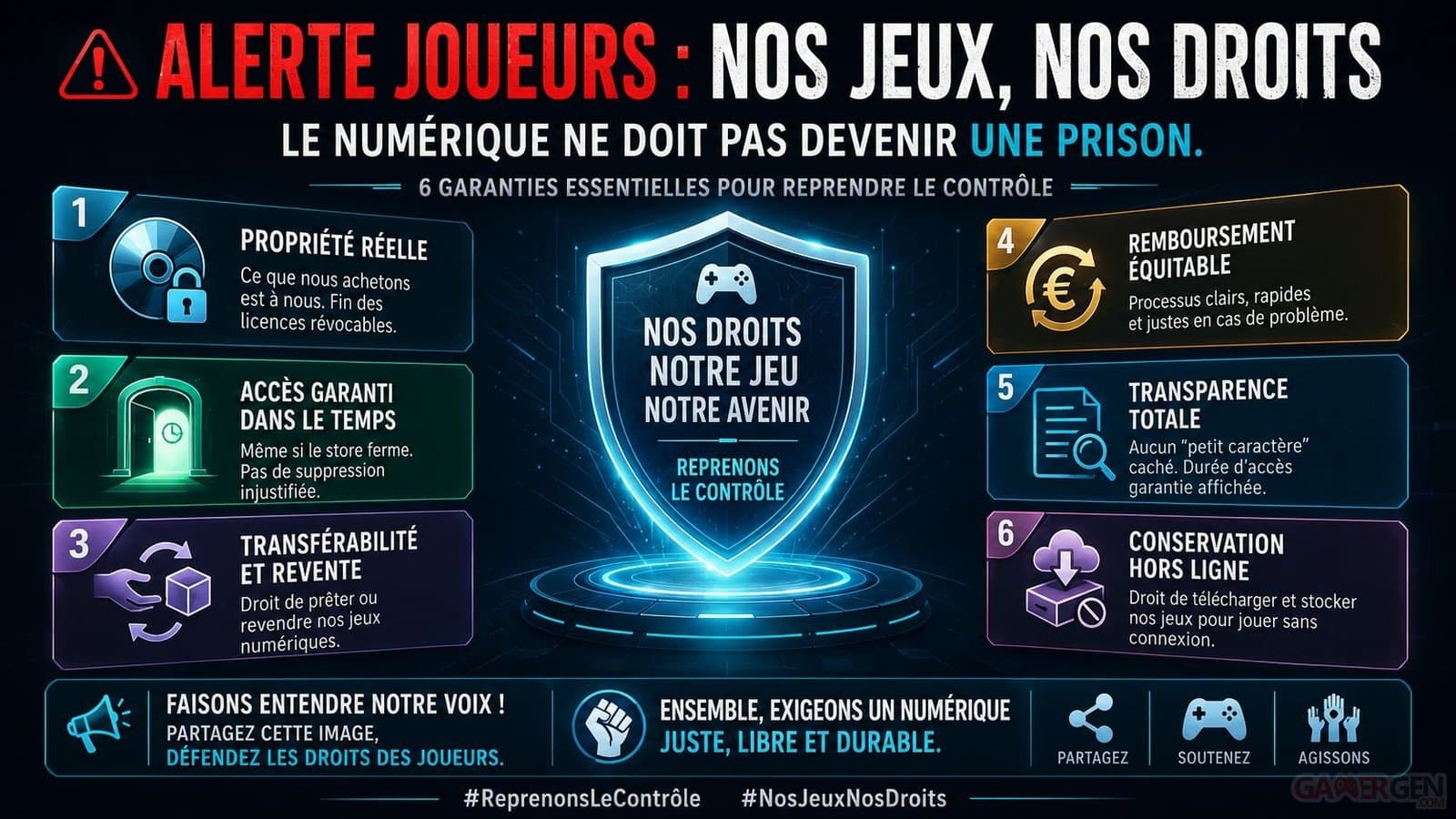
Following Sony's announcement about the end of the disc, Eric de Brocart, founder of GamerGen, has published an op-ed calling for the all-digital model to be framed by six concrete guarantees. A welcome convergence with the players' fight.
What is an EULA? The contract you sign without ever reading it
A video game is not an object you own: it is a contract you accept. The EULA (End User License Agreement) is the same for every game from a publisher, it can change after your "signature", and almost no one reads it. Here is how it works.
Stop Destroying Videogames: the European Commission's response, and why the fight continues
On 16 June 2026, the European Commission responded to the citizens' initiative "Stop Destroying Videogames" and its 1.29 million signatures: no new law for now. An analysis of this decision and the levers that remain.
Resale of digital games in France: laws, contradictions and avenues of recourse
The Cour de cassation definitively banned the resale of digital video games on 23 October 2024. Why physical copies remain resellable and digital ones do not, and what avenues exist to change this law.

Video game preservation in France: legal deposit, a model to extend
Since François Ier, France has preserved the works published on its soil. Legal deposit, entrusted to the BnF, includes video games, including those in digital form. A little-known model that would deserve to be generalised at the European scale.

Should we rethink "intellectual property" in video games?
The term "intellectual property" gives publishers a power of life or death over works that are nonetheless collective and cultural. A reflection on what this vocabulary covers, and conceals.
Reselling the digital: what if the physical medium were reborn as proof of licence?
Since the law refuses the resale of digital goods for lack of a medium, why not rematerialise the licence? A physical object carrying a unique code could represent a transferable right, to the benefit of players and publishers alike.
Reselling digital games: why publishers would gain too
Reselling is not the enemy of publishers. A broader market, revenue on every transaction, discovery of series: here is why a regulated digital second-hand market would also serve their interests.