
Resale of digital games in France: laws, contradictions and avenues of recourse
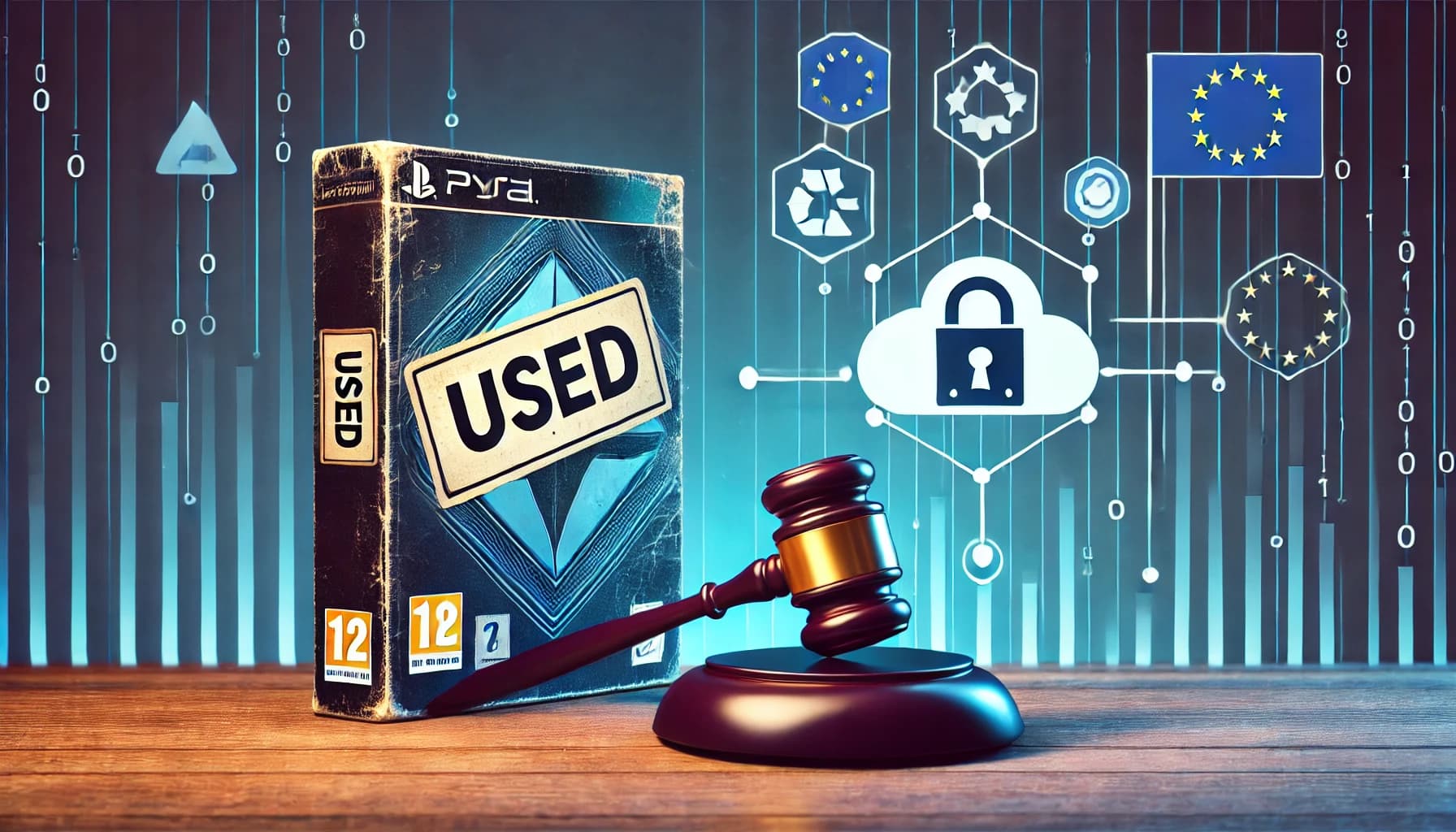
On 23 October 2024, the Cour de cassation brought a ten-year legal battle before the French courts to a close: in France, you cannot resell a video game bought in digital form. This ruling enshrines a contradiction that this feature sets out to decode, and to move beyond.
1. The physical / digital contradiction
A game on disc or cartridge can be resold: this is the rule of the exhaustion of the distribution right. It does not matter that the licence inside the box forbids it, the law prevails over the contract. You can therefore resell, lend or bequeath your physical copy.
For the same game as a download, the French courts ruled the opposite. The reasoning: the digital game is not "sold" but "licensed" on a personal and non-transferable basis, and it constitutes a complex work protected by copyright, for which exhaustion does not apply online. The result: the medium disappears, and with it the right to resell.
2. The judicial path
- 17 December 2019, TGI de Paris: victory for UFC-Que Choisir, right of resale recognised.
- 21 October 2022, Cour d'appel de Paris: judgment overturned, resale refused.
- 23 October 2024, Cour de cassation: appeal dismissed (ruling no. 23-13.738, unpublished), in favour of Valve before the French courts.
At the European level, the reasoning followed relies on two rulings of the CJEU: UsedSoft (2012), which allows the resale of downloaded software, and Tom Kabinet (2019), which refuses it for other works (e-books). Since games have been placed on the side of complex works, it is Tom Kabinet that prevails.
3. The avenues of recourse
The fight is not over; it is shifting ground.
- The European legislative route. Since the obstacle comes from the current directives, the real solution is to create a right to resell digital goods through legislation. This is the aim of our draft bill for fair resale.
- The technical route. Mechanisms already exist to transfer a licence in a secure and traceable way, while paying the publisher on each resale, see our article on resale via physical media and tokens.
- The unfair-terms route. Even without a right of resale, other clauses in platform contracts (retention of funds, discretionary termination) remain challengeable under Directive 93/13/EEC.
The paradox remains: the more the industry tips towards all-digital, the more the rights acquired in the physical era fade away, without any law ever having decided it.
Sources: Le Monde (24 Oct. 2024) · Gamekult · Cour de cassation, 23 Oct. 2024.
A French ruling, not a European end to the debate
Be careful not to over-interpret this ruling. Three important nuances:
- The reasoning is questionable: it introduces a distinction between software (used "until it becomes obsolete") and the video game (which could quickly come back onto the market "once the game is over"). This behavioural criterion appears fragile in light of real usage, many pieces of software are transferred after use, and many games continue to be played for years. The real pivot is not "has the game been finished?", but: does the copy sold fall under software (subject to exhaustion) or a complex work / a service not subject to digital exhaustion?
- The ruling is unpublished, not entered in the bulletin (no. 23-13.738): it is not established as a landmark ruling of principle intended to durably structure the whole body of case law.
- The Cour de cassation is not the CJEU: it did not refer a preliminary question to the Court of Justice of the Union, even though the debate concerns the interpretation of European directives (copyright 2001/29 versus the software directive 2009/24). Only the CJEU can set a binding and uniform interpretation of Union law.
In other words: this ruling closes the UFC-Que Choisir versus Valve litigation in France, but it does not settle the question definitively at the European level. The debate remains open, through a new action based on other arguments (games that are primarily software, single-player games with no online service, perpetual licences, total lock-down of the secondary market), through a preliminary question to the CJEU, through an intervention by the European Commission, or through legislation specific to cultural and interactive digital goods. PlayRite therefore considers that the question remains open at the European level.
Official references
- Directive (EU) 2019/770, digital content and services (EUR-Lex)
- Cour de cassation, 1st civ. chamber, 23 October 2024, no. 23-13.738 (unpublished, Légifrance)
- Cour d'appel de Paris, 21 October 2022
- Tribunal de grande instance de Paris, 17 December 2019
- CJEU, UsedSoft v Oracle, 3 July 2012, C-128/11
- CJEU, Tom Kabinet, 19 December 2019, C-263/18
Rate this article
4.3/5 · 7 vote
Comments (0)
Be the first to comment on this article.