
Back to homeGuides & Modèles 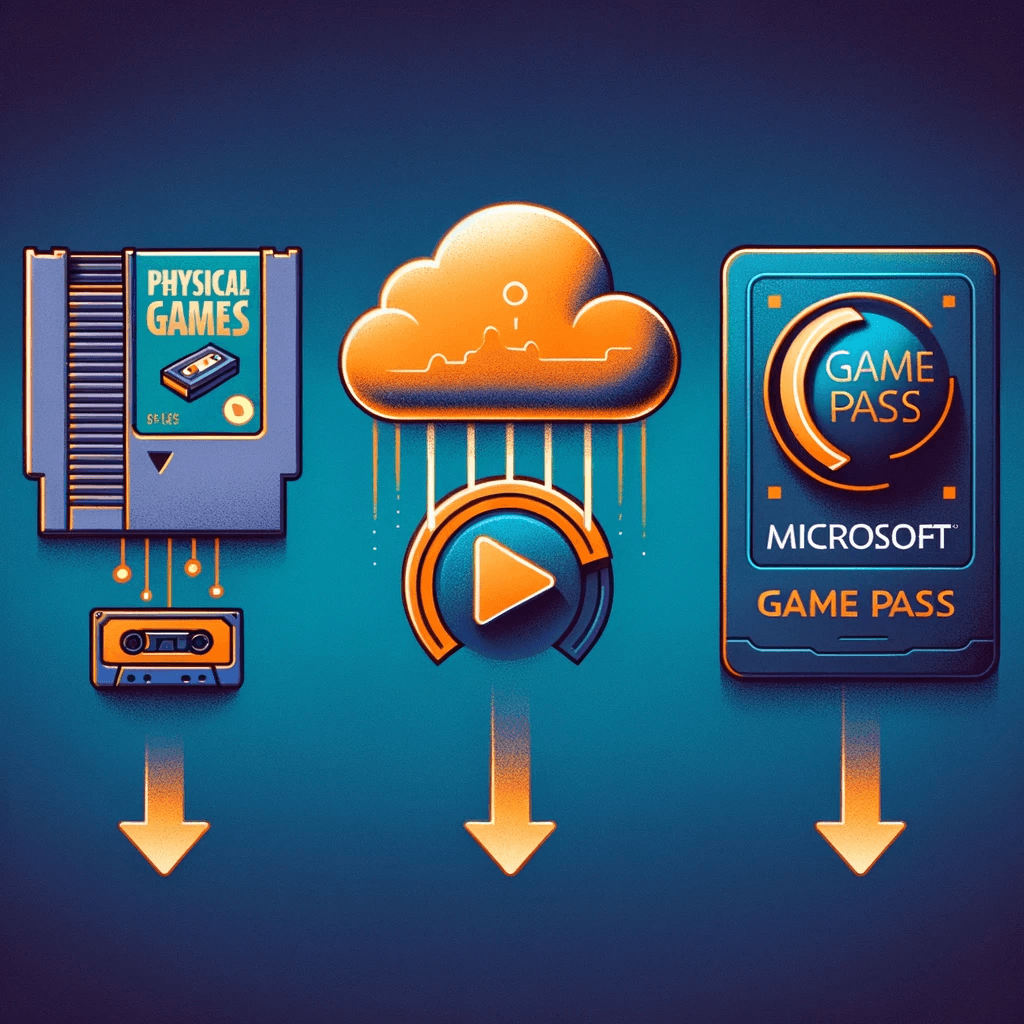
Physical, digital, Game Pass: what do you really keep?
25 octobre 2023· Updated on 6 juillet 2026
From cartridges to subscriptions, the way we access games has changed several times. Behind the convenience, each model offers very different rights. Let us compare them honestly on what matters: ownership, resale and preservation.
The physical game
- Ownership: you hold a tangible copy, a real sense of possession (with the nuances of "the illusion of the eternal physical game").
- Resale: possible and legal (reselling, lending, giving) thanks to the exhaustion of rights.
- Preservation: as long as the medium and the console work, the game runs, potentially for decades. The disc can nonetheless get scratched or broken.
The digital game (purchased)
- Ownership: a licence to use, not property. You do not own the game.
- Resale: forbidden in practice (confirmed by the French courts in 2024).
- Preservation: dependent on the survival of the platform and its servers. Immediate access and no object to store, in return.
The subscription (Game Pass, PS Plus...)
- Ownership: none. You are renting access to a catalogue.
- Resale: not applicable.
- Preservation: none. A game can leave the catalogue; ending the subscription puts an end to all access. It is the most convenient model... and the most precarious.
No model is "the right one" in absolute terms: everything depends on what you value. The real problem is that these differences in rights are almost never displayed clearly at the moment of payment.
The point is not to impose a model, but to guarantee choice and transparency, so that everyone knows what they are buying.
Rate this article
4.3/5 · 3 vote
Comments (0)
Be the first to comment on this article.